Pressure plate method - List of Manufacturers, Suppliers, Companies and Products | IPROS

Pressure plate method Product List

1~8 item / All 8 items

Displayed results

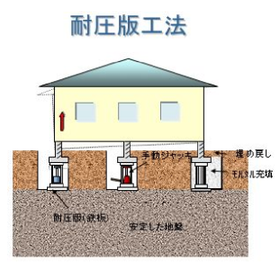
Submerged correction work - pressure-resistant slab method *

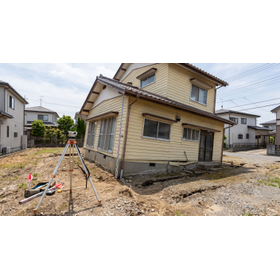
Restoring a tilted house using a pressure-resistant slab method that addresses shallow soft layers and settlement cessation.

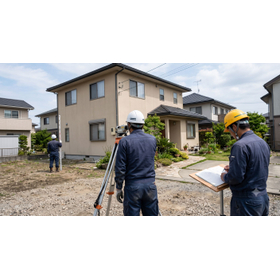
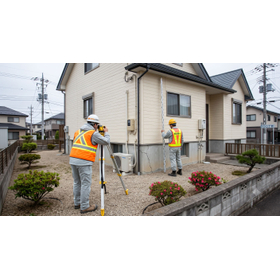
This is a subsidence correction work for buildings that have experienced differential settlement, aimed at restoring tilted houses. In the pressure plate method, a pressure plate (steel plate) is installed on stable ground, and the tilt of the building is precisely corrected using adjustment jacks and other tools. After the correction through jack-up, strong measures such as fixing with adjustment wheels, backfilling, and mortar filling are carried out to properly support the building's load and restore a safe living environment.

  • Renovation and repair methods
  • Pile and foundation work
  • Other earthworks, foundation works, and exterior floors
  • Pressure plate method

Added to bookmarks

Bookmarks list

Bookmark has been removed

Bookmarks list

You can't add any more bookmarks

By registering as a member, you can increase the number of bookmarks you can save and organize them with labels.

Free membership registration

Subsurface Correction Work | Epoxy Injection Pressure-Supported Slab Method to Repair Foundation Cracks and Partial Settlements

Simultaneously overcome foundational cracks and partial subsidence! We will strongly repair the base of your home using a combination of high-adhesion epoxy resin injection and pressure-resistant slab methods.

This is a reliable sinking correction solution that fundamentally addresses the issue of building subsidence accompanied by foundation cracks. For structural cracks in the foundation caused by uneven ground or localized softening, high-viscosity epoxy resin is injected and filled under high pressure and density to restore the compromised structural strength and significantly improve waterproofing. At the same time, a pressure plate is precisely installed directly beneath the sunken foundation, and high-precision millimeter-level lift-up is performed using hydraulic jacks to restore the tilted building to a precise horizontal state. After the jacking is completed, air bubble mortar (air milk) is poured into the fine gaps that have formed between the foundation and the ground, filling and solidifying them without any gaps, significantly increasing the contact area to prevent future re-sinking or differential settlement. Since this solution accommodates construction while residents are living in the home without the need for large machinery, extensive demolition, or temporary relocation, it greatly reduces the burden on homeowners' daily lives and secondary costs such as temporary housing rent. With reliable construction techniques and uncompromising quality control, we dramatically restore the seismic resistance, durability, and asset value of homes, providing long-lasting peace of mind.

  • Renovation and repair methods
  • Residential foundations
  • Other earthworks, foundation works, and exterior floors
  • Pressure plate method

Added to bookmarks

Bookmarks list

Bookmark has been removed

Bookmarks list

You can't add any more bookmarks

By registering as a member, you can increase the number of bookmarks you can save and organize them with labels.

Free membership registration

Settlement correction work | Epoxy injection method for pressure-resistant slabs with shallow foundation cracks and settlement correction.

Quickly resolve foundation cracks and partial subsidence after handover! Complete restoration of post-delivery trust through the combined use of high-adhesion epoxy resin injection and pressure-resistant slab methods.

This is a reliable settlement correction plan that aims to quickly resolve foundation cracks and partial subsidence issues that occur in newly built homes after handover, with the utmost consideration from the construction company and house manufacturer towards the homeowner. For foundation cracks caused by uneven ground or soil consolidation, high-viscosity epoxy resin is pressure-injected to ensure adhesion and waterproofing of the structure. In the lifting process, pressure plates are concentrated directly beneath the foundation, and using small hydraulic jacks and high-precision laser measurement, precise leveling is performed in millimeter increments, using the building's own weight as a counterforce. After the jacking is completed, air bubble mortar is injected at high density into the voids beneath the foundation to establish surface support and prevent future subsidence. The construction can be carried out while the homeowner is still living in the house, eliminating the need for temporary relocation and reducing secondary costs and mental burden for the homeowner. By providing consistent support through the process of reattaching ground guarantees after construction, we fulfill our responsibility for defect handling and strongly support the rebuilding of trust through aftercare.

  • Renovation and repair methods
  • Residential foundations
  • Other earthworks, foundation works, and exterior floors
  • Pressure plate method

Added to bookmarks

Bookmarks list

Bookmark has been removed

Bookmarks list

You can't add any more bookmarks

By registering as a member, you can increase the number of bookmarks you can save and organize them with labels.

Free membership registration

Settlement correction work | Epoxy pressure-resistant slab method to repair foundation cracks and settlement in small sites.

Resolve foundation cracks and partial subsidence near narrow lots and property boundaries! Safe restoration with high-viscosity epoxy resin injection and pressure-resistant slab method, considering neighboring properties.

This is a subsidence correction technology that safely and with low vibration resolves partial subsidence issues accompanied by foundation cracks in densely populated residential areas and narrow sites adjacent to property boundaries. For foundation cracks caused by excavation on neighboring land or lateral flow of fill, high-viscosity epoxy resin is injected densely to strongly bond and reinforce the broken structure, restoring structural rigidity and waterproofing. In the lifting process, it accommodates narrow sites where large machinery cannot enter by concentrating compact, high-strength steel pressure plates directly under the foundation. Using small hydraulic jacks and high-precision laser measuring instruments, the building's weight is used as a reaction force to carefully lift it millimeter by millimeter, returning it to a precise horizontal state without affecting neighboring houses. After correction, self-hardening lightweight bubble mortar (air milk) is poured into the voids under the foundation to densify it, expanding the contact area to prevent re-subsidence. With construction carried out while residents are living in the home, eliminating the need for temporary housing, and thorough low-noise and dust control measures, it minimizes neighborhood disputes while protecting the structural stability and asset value of the home.

  • Renovation and repair methods
  • Pile and foundation work
  • Other earthworks, foundation works, and exterior floors
  • Pressure plate method

Added to bookmarks

Bookmarks list

Bookmark has been removed

Bookmarks list

You can't add any more bookmarks

By registering as a member, you can increase the number of bookmarks you can save and organize them with labels.

Free membership registration

Underpinning repair work | Epoxy injection method for foundation cracks that can be repaired while living in the house.

No need to move, and temporary housing costs are zero! We will repair foundation subsidence and cracks while you live there using high-adhesion epoxy resin injection and pressure-resistant slab methods.

This is a reliable home repair solution that allows you to safely and neatly repair building subsidence with foundation cracks while living in your familiar home. Since there is no need for moving or securing temporary housing, you can significantly cut unnecessary secondary costs and efforts, which can range from several hundred thousand to several million yen. High-viscosity epoxy resin is injected densely into the damaged foundation structure due to subsidence stress, firmly bonding and reinforcing the cracks to improve structural strength and waterproofing. In the lifting process, a compact pressure plate and hydraulic jacks are set under the foundation, and the building's behavior is monitored with high-precision laser measurements to accurately correct the tilt in millimeter increments. By using quiet equipment that minimizes noise and vibration, and thoroughly implementing dust prevention measures to keep dust from entering the interior, the construction can be completed in a short period without compromising the comfort of remote work or daily life. After the jacking up, air milk is filled at the base to prevent re-subsidence, and we provide consistent support until the ground warranty is reattached, delivering the highest sense of security to the homeowner, even better than at the time of new construction.

  • Renovation and repair methods
  • Residential foundations
  • Other earthworks, foundation works, and exterior floors
  • Pressure plate method

Added to bookmarks

Bookmarks list

Bookmark has been removed

Bookmarks list

You can't add any more bookmarks

By registering as a member, you can increase the number of bookmarks you can save and organize them with labels.

Free membership registration

Settlement Correction Work | Epoxy Pressure Plate Method to Repair Foundation Cracks and Settlement in Used Houses

Completely overcome foundation cracks and partial subsidence in used houses from the ground up! Dramatically restore property value with high-viscosity epoxy resin injection and pressure-resistant slab methods.

This is an advanced settlement correction solution that resolves foundation cracks and partial subsidence issues identified in used housing transactions and inspection surveys, dramatically enhancing the value of real estate assets. For foundation cracks caused by uneven ground, high-viscosity epoxy resin is pressure-injected to integrate and reinforce the structure, restoring seismic strength and waterproofing to the level of new construction. For correcting tilting, high-strength pressure plates and hydraulic jacks are installed beneath the foundation, allowing for precise millimeter-level horizontal lift-up while monitoring displacement with high-precision laser measuring devices. It effectively resolves issues with door operation and floor inclinations, ensuring compliance with building inspections and mortgage review standards. After lifting, bubble mortar (air milk) is filled and compacted beneath the foundation to prevent re-sinking, providing consistent support until the ground warranty is reinstated. With rapid construction that does not require temporary housing, it minimizes the burden on homeowners during pre-sale renovations or post-purchase repairs before handover, strongly supporting the smooth completion of real estate transactions.

  • Renovation and repair methods
  • Pile and foundation work
  • Other earthworks, foundation works, and exterior floors
  • Pressure plate method

Added to bookmarks

Bookmarks list

Bookmark has been removed

Bookmarks list

You can't add any more bookmarks

By registering as a member, you can increase the number of bookmarks you can save and organize them with labels.

Free membership registration

Settlement correction work | Epoxy pressure-resistant slab method to repair foundation cracks at retaining walls and embankments.

Solve foundation cracks and uneven settlement caused by uneven ground at retaining walls and embankments! We will strengthen the foundation using high-viscosity epoxy resin injection and pressure-resistant slab methods.

This is a high-precision settlement correction solution that fundamentally addresses the problem of uneven ground and differential settlement associated with foundation cracking in residential areas close to retaining walls and embankment/cut boundaries. For the foundation concrete structure that has fractured due to uneven loading, high-viscosity epoxy resin is injected densely to bond and repair the cracks, restoring structural rigidity and waterproofing to the level of new construction. In the lifting process, a thick steel plate pressure distribution slab and hydraulic jacks are set directly under the foundation, and real-time monitoring of the building's behavior is conducted using high-precision laser measurement, allowing for accurate horizontal correction in millimeter increments. After lifting is complete, lightweight bubble mortar (air milk), which has excellent fluidity, is filled into the voids beneath the foundation to densify it, expanding the contact area to support the building's weight over a larger surface and strongly preventing future re-settlement. This method can be implemented even in areas near retaining walls or in narrow spaces where large machinery cannot be brought in, and by accommodating construction while residents are living in the property without the need for demolition or temporary housing, it dramatically reduces secondary expenses and living stress for the homeowners.

  • Renovation and repair methods
  • Pile and foundation work
  • Other earthworks, foundation works, and exterior floors
  • Pressure plate method

Added to bookmarks

Bookmarks list

Bookmark has been removed

Bookmarks list

You can't add any more bookmarks

By registering as a member, you can increase the number of bookmarks you can save and organize them with labels.

Free membership registration

Sinking Correction Method: Load-Bearing Slab Method

Create improved ground from the support layer to take reaction forces! Suitable when the layer of weak ground under the building is less than 1.5m.

The "Pressure-resistant slab method" is a settlement correction method used when there is a layer of weak ground less than 1.5 meters beneath a building. It creates improved ground from the supporting layer to take reaction force. By correcting the building to a solid ground, it is possible to reduce earthquake damage. The building's tilt is jacked up and leveled, restoring a comfortable and safe living environment. 【Features】 ■ Suitable when there is a layer of weak ground less than 1.5 meters beneath the building ■ Creates improved ground from the supporting layer to take reaction force ■ Reduces earthquake damage by correcting the building to a solid ground ■ Jacks up the building to level it and restores a comfortable and safe living environment *For more details, please refer to the PDF materials or feel free to contact us.

  • Ground improvement
  • Residential foundations
  • Earthquake-resistant construction method
  • Pressure plate method

Added to bookmarks

Bookmarks list

Bookmark has been removed

Bookmarks list

You can't add any more bookmarks

By registering as a member, you can increase the number of bookmarks you can save and organize them with labels.

Free membership registration

Related Categories of Pressure plate method